

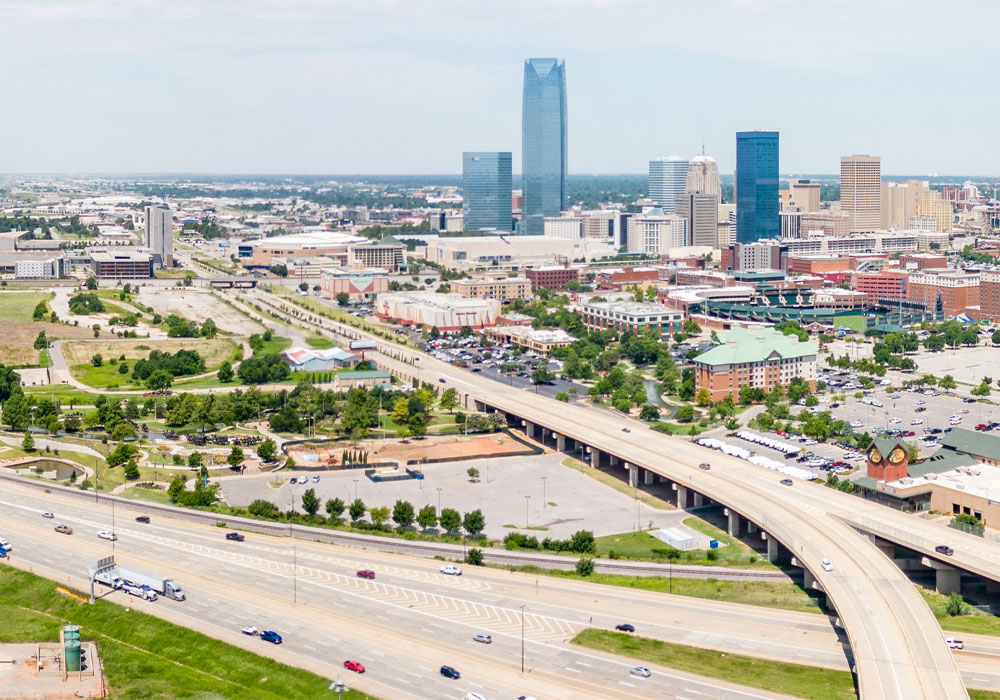
Ask any Oklahoma personal injury attorney which stretch of road generates the most serious cases, and I-35 comes up almost every time. It’s the state’s busiest interstate, cutting straight through the heart of Oklahoma City and linking the Dallas-Fort Worth area to Wichita and Kansas City. That volume, combined with speed and heavy truck traffic, is exactly why a wreck on I-35 tends to look very different from a fender-bender on a city street.
Speed Changes Everything
The math of a crash is simple: the faster the vehicles are moving, the more force gets transferred in a collision. I-35 carries some of the highest speed limits in the state, and Oklahoma’s interstates generally allow faster travel than most other U.S. highways. A rear-end collision at 70 mph does dramatically more damage to a vehicle, and a body, than the same collision at 10 mph in a parking lot. That’s a major reason highway wrecks tend to produce more serious injuries, higher medical bills, and larger claims.
Heavy Truck and Commercial Traffic
I-35 isn’t just carrying commuters. It’s a major freight corridor, and the interchange where I-35 meets I-40 near downtown Oklahoma City is considered one of the most dangerous stretches in the metro for exactly that reason: dense commercial truck traffic moving through complex, high-volume merges. When a passenger vehicle collides with a loaded semi-truck, the size and weight mismatch alone often turns what would be a moderate crash into a catastrophic one. Truck accidents also frequently bring additional parties into a claim, including trucking companies and their insurers, which adds complexity most surface-street accidents never involve.
Road Design and Conditions
Frequent lane merges, abrupt speed transitions, and ongoing construction zones all add risk on I-35. Statewide, a significant share of Oklahoma’s highways remain in poor or mediocre condition, and structural pavement issues can directly contribute to how severe a crash becomes. Interchanges like the I-35/I-40 merge downtown, where the two interstates run together for roughly two miles, create some of the highest-risk merging conditions in the state.
The Numbers Tell the Story
I-35 and I-44 consistently rank among Oklahoma’s most dangerous corridors for both total crashes and fatalities. Statewide, Oklahoma recorded hundreds of traffic fatalities and tens of thousands of injury crashes in recent years, and interstates like I-35 and I-40 are consistently named among the routes most likely to produce serious, high-speed collisions.
What This Means for Your Claim
Because highway wrecks tend to involve higher speeds, larger vehicles, and more severe injuries, the resulting claims are often more complex and higher in value than a typical low-speed accident. They may involve:
- Extensive medical treatment, surgery, or long-term rehabilitation
- Multiple liable parties, including trucking companies or their insurers
- Larger, more aggressively contested insurance claims
- A greater need for thorough accident reconstruction and evidence gathering
If you’ve been injured in a wreck on I-35 or another Oklahoma highway, the stakes are usually higher, and so is the importance of having your claim built correctly from the start.
Kremer Law is here to help you understand your options after a serious highway accident and fight for the compensation your case deserves. Contact us today for a free consultation.
Unsure if your case is worth pursuing?
If you’re dealing with ongoing pain, missed work, or frustration with insurance, it’s time to get answers.