
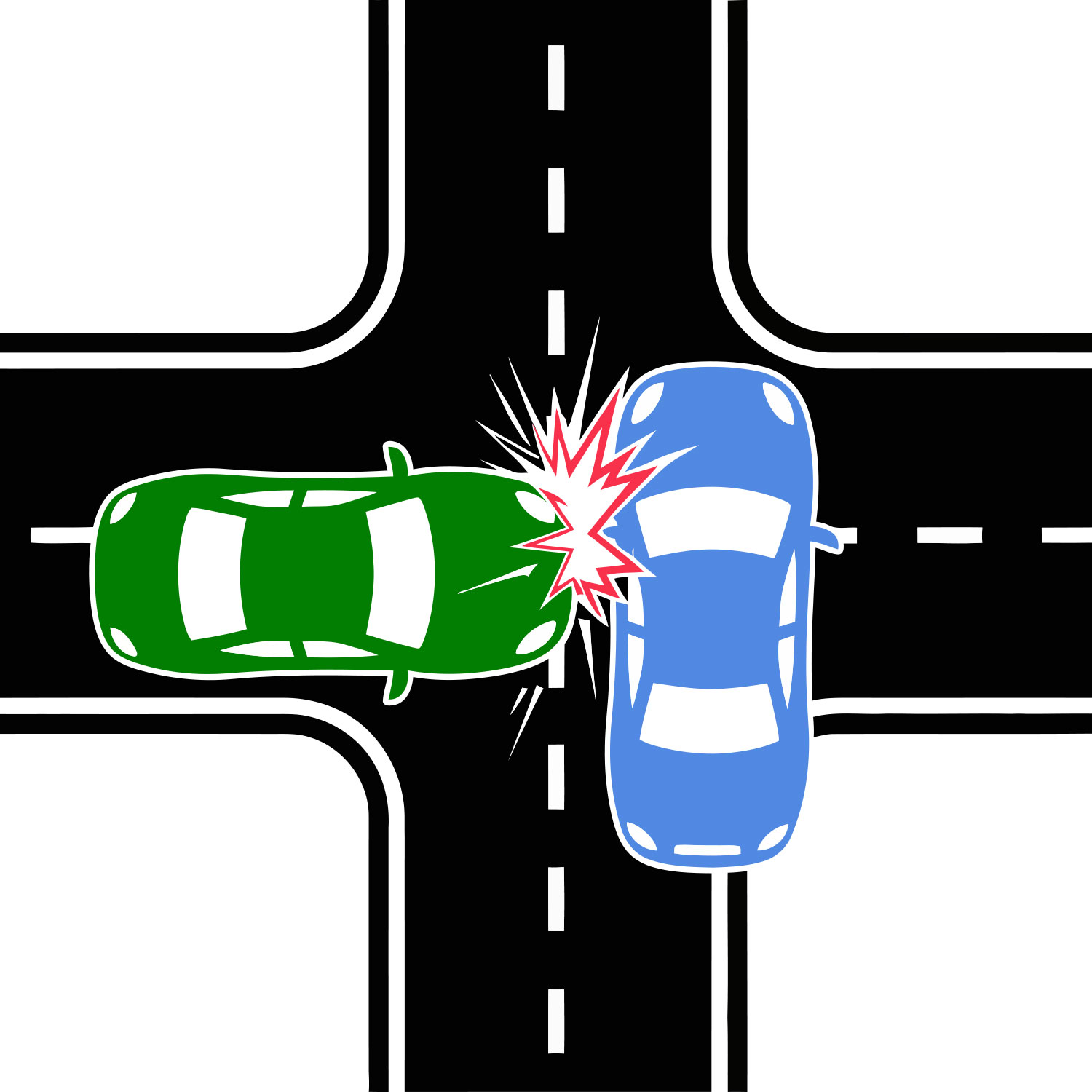
A “T-bone” (also called a side-impact) crash happens when the front of one vehicle strikes the side of another — often in an intersection. These collisions are common in the Oklahoma City area because intersections combine turning traffic, changing lights, and drivers who can be distracted or rushing. Unfortunately, they’re also some of the most dangerous crashes because there’s less structural protection on the side of a vehicle than in the front or rear.
Below is what you should know about injuries, who may be at fault, and why insurance companies often fight these claims.
Common Injuries in T-bone Crashes
Side-impact crashes frequently cause injuries that are serious even at “city speeds,” including:
- Head and brain injuries (concussions from impact or airbag deployment)
- Neck and back injuries (whiplash, disc issues)
- Chest and rib injuries (from door intrusion or seat belt force)
- Hip and pelvic injuries (a common impact area in side collisions)
- Shoulder injuries and arm/wrist fractures (bracing during the crash)
It’s also common for symptoms to worsen over the next 24-72 hours, which is why prompt medical evaluation and consistent documentation matter.
Liability: Who Had the Right-of-Way?
Fault in a T-bone crash often comes down to right-of-way and traffic control compliance — not just whose car was hit on the side.
Some frequent liability scenarios include:
Left-Turn Failures
A major cause of intersection T-bones is a driver turning left across oncoming traffic when it isn’t safe. Oklahoma law requires a driver turning left to yield to oncoming vehicles that are close enough to be an immediate hazard.
Red-Light and Signal Violations
Many side-impact collisions happen when a driver runs a red light or misjudges a yellow. Oklahoma’s traffic signal rules are set out in Title 47 (including the meaning of green, yellow, and red indications).
Shared Fault Arguments
Insurers may claim the “favored” driver was speeding, distracted, or entered late on a yellow — so even if the other driver caused the crash, the carrier tries to shift a percentage of blame.
Oklahoma uses a modified comparative negligence system. In plain terms: your recovery can be reduced by your share of fault, and you may be barred from recovery if your negligence is greater than the other side’s (or greater than the combined negligence of multiple responsible parties).
Why Insurance Claims are Harder with Intersection T-Bones
T-bone claims often create unique insurance headaches:
“He Said / She Said” Disputes
Drivers frequently give conflicting stories about who had the green light, who turned first, or who “came out of nowhere.”
Video Evidence May Not Be Available the Way People Assume
Many people expect the city to have recorded intersection footage. However, Oklahoma City’s Traffic Services information states the City does not have cameras that record at intersections, which can make early evidence collection even more important.
Policy-Limit Problems
Side-impact injuries can be expensive. If the at-fault driver has minimum coverage, the claim may quickly become a policy-limits case.
Uninsured/Underinsured Driver Issues
If the at-fault driver is uninsured, leaves the scene, or doesn’t have enough coverage, your own uninsured/underinsured motorist (UM) coverage may be critical in Oklahoma.
Practical Steps That Help Protect a T-Bone Claim
- Get medical care promptly – especially for head/neck symptoms.
- Photograph vehicle positions, damage, and the intersection layout.
- Get witness names/numbers before they leave.
- Request the police report when available (OKC provides a records request process for police and accident reports).
Intersection T-bone cases are often winnable, but they tend to be evidence-driven and insurance-heavy. The sooner key facts are preserved, the better.
Unsure if your case is worth pursuing?
If you’re dealing with ongoing pain, missed work, or frustration with insurance, it’s time to get answers.